


As part of this year’s Etchings Festival, we invited our Etchings Fellows and guest musician Amaury Acosta to create a new work designed specifically to be experienced as part of the world in which you, our audience, are currently immersed. For the best experience, we invite you to do the following:
Scroll.
Play audio.
Put phone in pocket.


Where it collides (2026) is work that explores the intersection of human society and nature. It is built off of ruminations on the integration of wildlife and infrastructure and how that collision can hurt local ecosystems. The entire work uses natural found sounds I gathered across New England that undergo different gradients of processing. This is juxtaposed with electronically modified snippets of early to mid 1900s nature documentaries and large corporation advertisements that are connected to either contributing to pollution and ecosystem destruction or spreading awareness and educating on the threats of those practices. Lastly, adapted and reversed samples of Ravel's Jeux D’Eau (water games) and Une Barque Sur L'ocean (a boat on the ocean) make scattered appearances across the work, usually in conjunction with recorded sounds of water found in nature. The last major elements present within the work are recorded and adapted birdcalls and boosted sound pollution created by humans, like conversation, low spectrum airplane noise, and electronic grid noise (60hz).
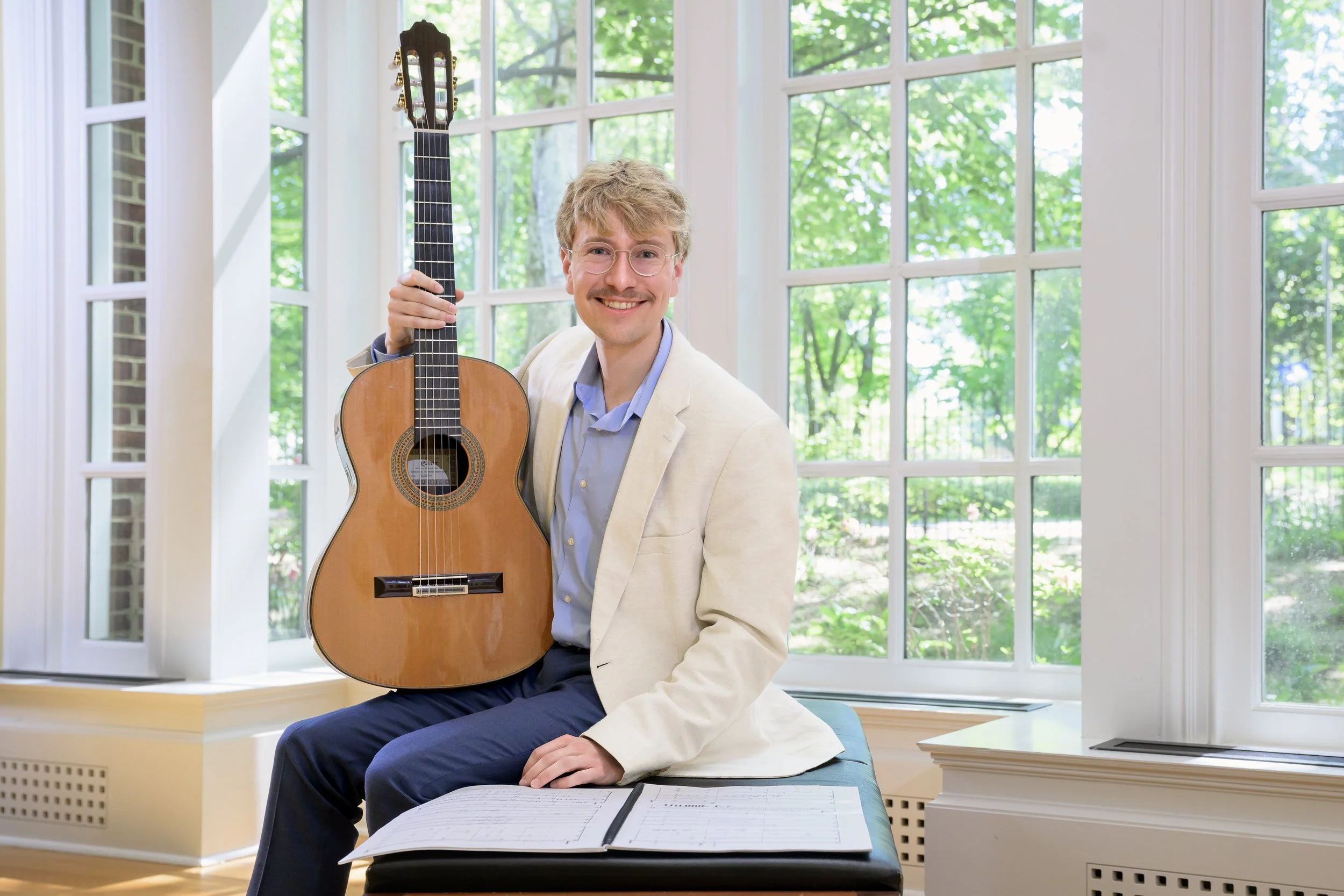

Costa Rican American composer and guitarist Alejandro Lobo (b. 2004) creates “harmonically rich” and “narratively driven” sonic ecosystems. His recent work explores gradual transformation, biological phenomena, and cultural architecture. Lobo has collaborated with ensembles around the world and has received notable accolades including the Presser Foundation Award, the Eagleson Memorial Award, the Jefferson Prize, and the National Hispanic Recognition Award. He is 2025–28 composer-in-residence with the Wilmington Classical Guitar Society, co-founder of the Outward New Music Collective and Ensemble, and studies composition and classical guitar at the Peabody Institute of the John Hopkins University.


Transforming Biomes contrasts the dry, brittle sounds of my home in the Sonoran desert with those of New England’s more lush climate. An introduction with twigs, rocks, and skeletal cacti dissipates into a flowing piano melody. This central section is entirely constructed from inversions, transpositions, and gradual transformations of a four-note motive (appearing as the piano’s first four notes). The sounds of running water—perhaps a city street flowing after a monsoon or a trickling meadow stream—fade in, welcoming the coda in which a brief, gliding flute solo accompanies the return of the botanical sounds that began the piece.
July 2026 will be my first time experiencing the northeastern part of this country, and I’m reminded of how water so centrally shapes our lives and the ways we experience the world. The profoundest issues of survival and the most mundane experiences—say, noticing today’s humidity—are motivated by water, or its lack. Let this piece serve as a reminder that our treasured resource is also finite: water is life!
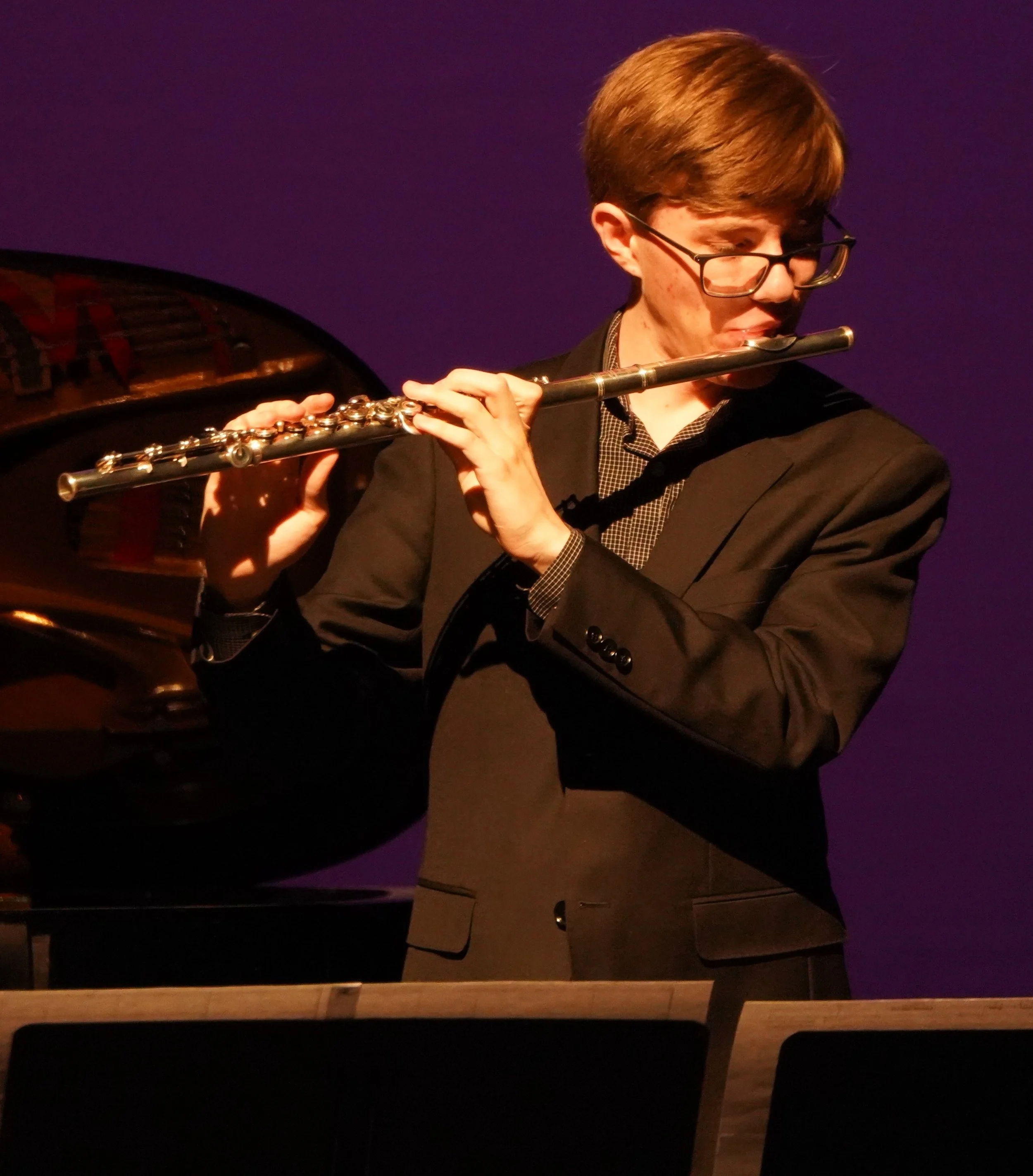
Cole Nagoda (b. 2004) is a meta-modernist composer and flutist whose music is characterized by thoughtful, crystalline architectures and a predilection for counterpoint. Cole is currently an undergraduate composition major at the University of Arizona, where he was a 2025 Medici Scholar.
He is also an alumnus of the Tucson Symphony Orchestra’s Young Composers Project. After getting his bachelor’s degree, Cole plans to go to grad school, with the long-term goal of teaching composition at the university level.


Fixed media piece Aqueous Confessions is designed specifically for the outdoor environment of Look Park, serving as a multi-perspective commentary on climate, memory, and the human relationship with water. The piece begins by subverting the listener's acoustic reality, utilizing a heavy, low-pass filtered rain texture and deep sub-bass frequencies to create a claustrophobic, submerged auditory space. This dark, continuous drone acts as a canvas for the microscopic elements of the environment to unfold.
As the installation progresses, granular synthesis shatters the organic sound of water droplets into erratic, digital micro-rhythms. These crystalline, tech-forward textures clash with ghostly, vocoded vocal swells that surface from the low frequencies—representing the lingering "human memory" within a changing ecosystem. It is an elegy to shifting seasonal patterns and the tension between nature and technological observation.
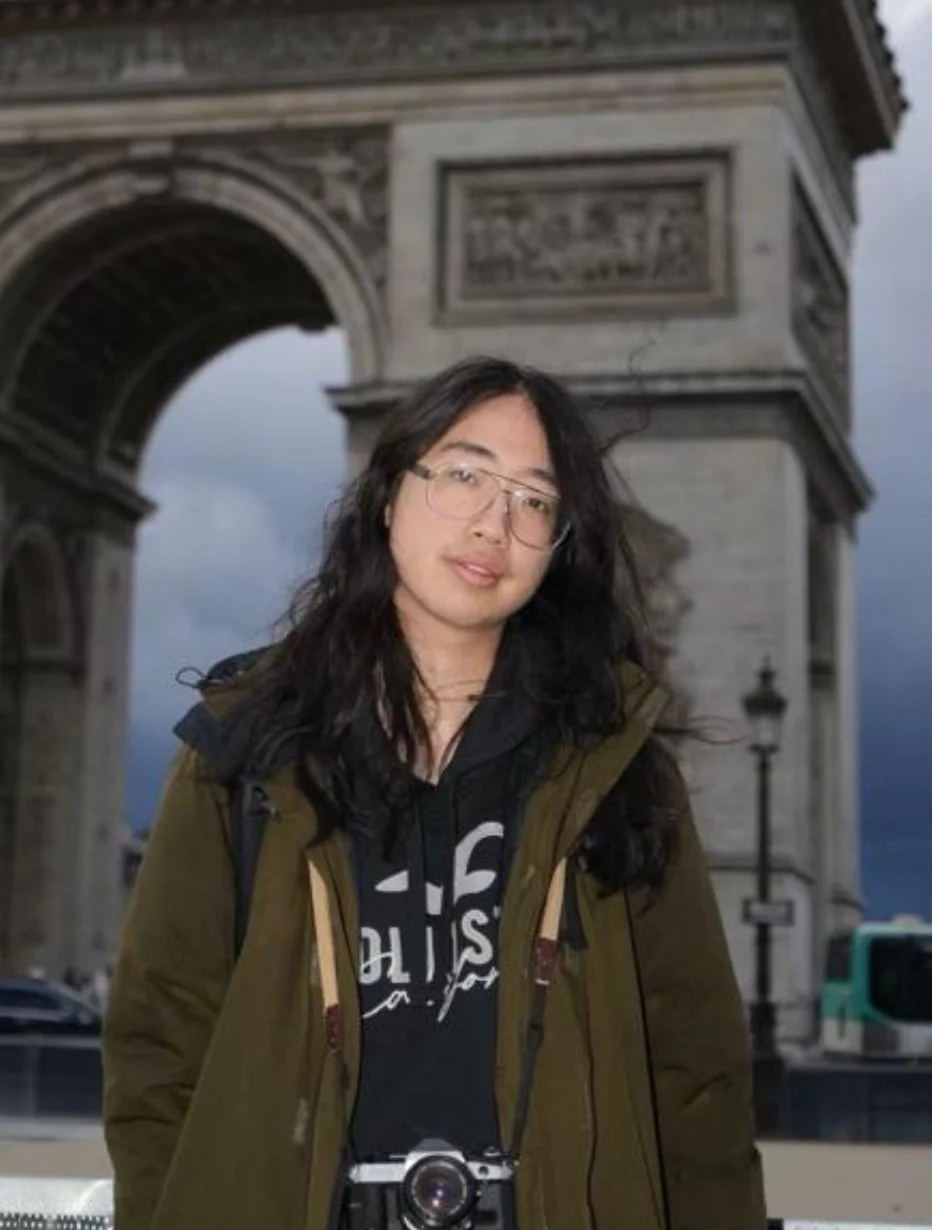
Tian Jiang is a composer and Jinghu performer whose work bridges the gap between the structural intricacies of traditional Chinese music and the algorithmic logic of contemporary music systems. Deeply rooted in the sonic heritage of Chinese Opera, his research focuses on deconstructing the nuances of Peking Opera, reimagining these ancient timbres through the lens of Western avant-garde techniques.
Beyond the staff paper, Tian Jiang is an audio engineer with deep expertise in studio architecture and high-fidelity signal flow. Having designed and calibrated a professional recording studio, he possesses a technical mastery over the capture and manipulation of acoustic sound. Currently a DMA student in Boston, he integrates these diverse disciplines to create immersive, cross-cultural sonic environments.


Text by Sylvia Plath (1932-1963)
Each day, species of birds across North America are dying, going extinct, being lost to history and the memories of those who cared to listen. Their ecosystems are being systematically destroyed, in pursuit of wealth and capital, easy resources, lowering costs. The plastics in our water, in our soil, seeping into the bones of our earth, poisoning her from within. The songs of these birds are rarely heard now, slowly creeping into the background among the noise of the world.
Each day, queer and trans people across the United States are dying, being silenced, being systematically persecuted for their existence. Their homes and cities are being made uninhabitable, targeted by an agenda that seeks power through fear and control, propaganda and simulations. Their voices, their stories, their joy and love and sorrow and truth, buried in a casket that doesn’t say their name. The lies in our news, seeping into the minds, the books, the jokes, of the American people, poisoning their hearts. The songs of queer and trans Americans are rarely heard now, slowly creeping into the background among the noise of the world.
What will you do? When the next bill is signed into law, when the next book is banned, when the next violent tragedy occurs? What will you do, when the next forest is destroyed, the next landfill filled, the next species eliminated? Whose songs will you choose to remember? When the birds fall silent.
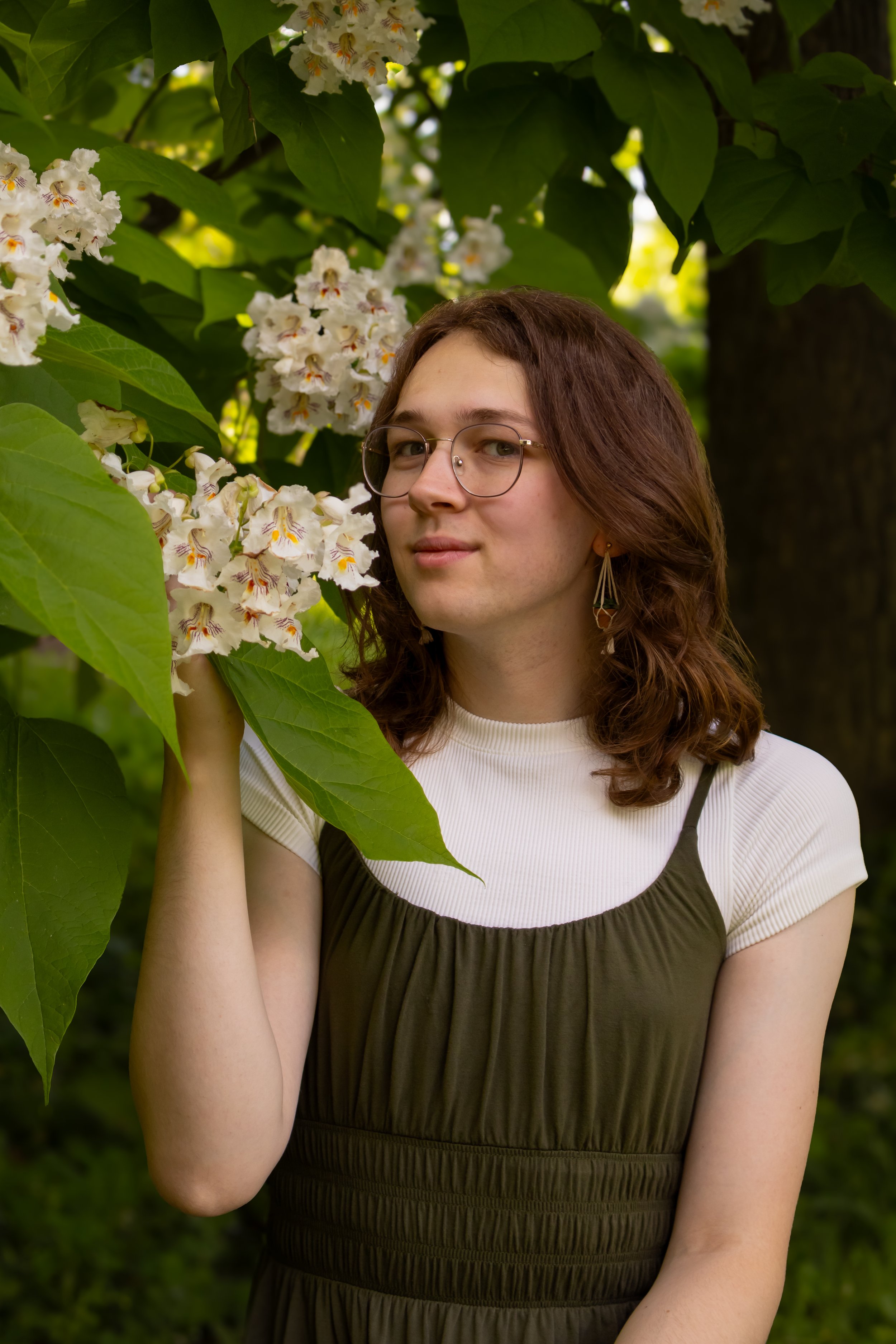
Jordan Timmins (b. 2003) is a composer, educator, and storyteller, weaving narratives with their music, teaching, and conducting. Their compositions reflect the emotional resonance that exists between the natural environment and the human condition and manifests this connection through the motivic and formal development of each piece. Their works have been performed with a variety of ensembles, including the Baldwin Wallace Symphony Orchestra, the BW Choral Gala ensembles, and a reading with Collage New Music at the Longy School of Music. They were also the 2024 recipient of Baldwin Wallace University’s Center for Diversity and Inclusion’s “Excellence in Performing Arts” award, for their orchestral composition, “Letter From a Postman”.


“Slowly is the Fastest Way” is the opening track to my next album Sábado Especial. The title is inspired by my neighbor, Andre DeShields’ Oscar acceptance speech where he said, “slowly is the fastest way to get to where you want to be.”
In a world that constantly rewards speed and instant gratification, this slow, contemplative piece blends experimental electronic production with jazz composition and orchestral arranging techniques.
All of this stems from a drum solo that I did at my show at Dead Letter Number Nine in Williamsburg, New York last year. I performed a piece using sensory percussion sensors (an innovative drum technology).
The moment I played this piece, I looked up and everyone in the room had their eyes closed, completely still and submerged in the music- which is the feeling I want to evoke when people come hear me perform. I realized that piece had something special. A few months later, I went into The Creamery Studio in Brooklyn, New York to record it. I then sampled Mike King’s piano playing and invited the great Stacy Dillard to play tenor saxophone. I also played Fender Rhodes and synthesizers on this piece, and I used various orchestral sound libraries to create the other orchestral sounds.
The piece is in D minor; a contemplative key I chose to resemble the stillness of being next to water.
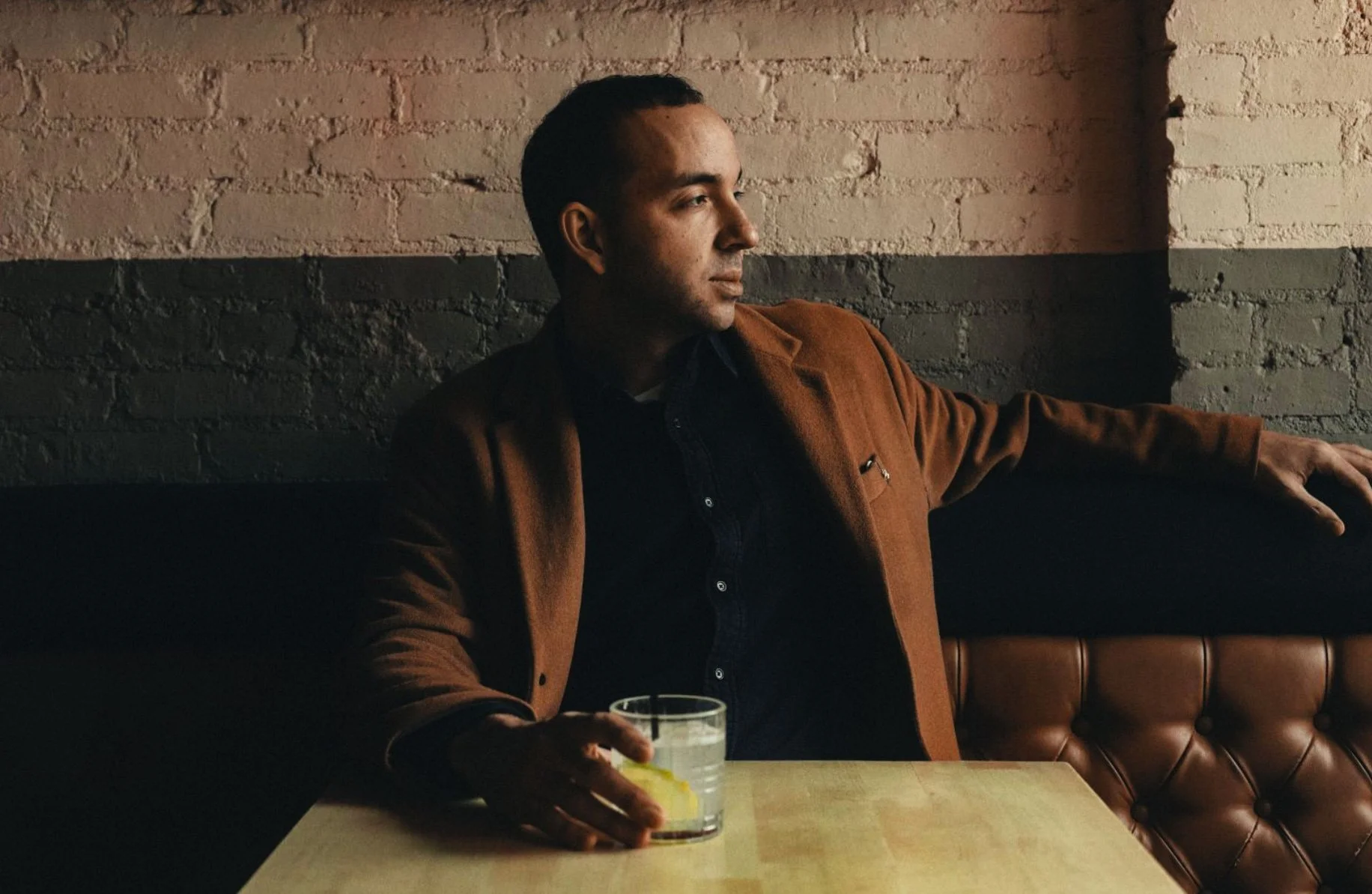
Amaury Acosta, known as King Klavé, is a Cuban-American drummer, composer, and producer based in New York City. Renowned for his creativity and genre-blurring sound, Amaury’s music is as rooted in tradition as it is forward-looking. He merges Afro-Cuban rhythms, jazz, hip-hop, funk, soul, and electronic music to create immersive, otherworldly experiences that resonate deeply with today’s audiences.
Amaury began his musical journey at LaGuardia High School for Performing Arts and graduated from Jacqueline Kennedy Onassis High School before attending The New School for Jazz & Contemporary Music. At The New School, he developed a deep understanding of music theory and composition. This is where he founded (U)nity, a five-member collective of international musicians that combines Afro-Cuban grooves with contemporary sounds. The group has received critical acclaim, touring internationally and captivating audiences worldwide.
Amaury has collaborated with music icons including Iggy Pop, Robert Glasper, Pino Palladino, Q-Tip, Bilal, Descemer Bueno, Gigi Hadid, Kimbra, Candido Camero, José James, and Paquito D’Rivera. Known for his bold musical vision and exceptional skill in composition and production, Amaury is a dynamic presence in New York City’s music scene. When he’s not performing, he’s creating new music, refining his craft, and exploring with a sense of wonder.
In September 2022, Amaury released his debut album, KingKlavé, a project ten years in the making that features collaborations with over 20 musicians, blending jazz, hip-hop, R&B, funk, and Afro-Cuban music. Recorded in New York City, the album is part of a multi-media art project that spans music, film, and painting. KingKlavé was named NPR’s 2022 Staff Picks Album of the Year. Amaury is a multi-faceted creative force who thrives on pushing the boundaries of music and artistic expression. Known for his audacious approach to sound, he’s always pursuing new projects and remains open to discovering fresh ideas—and, just as importantly, connecting with inspiring new people.



History of a bridge is a fixed-media work for trombone choir, male chorus, and electronics that takes us on a journey through the events that a bridge built in Look Park might have experienced. It begins with purely the sound of the wind blowing through the trees: nothing has been built and we are encircled in the stillness of nature. Gradually, signs of activity are heard in the piece. A woodpecker pecks at a nearby tree to foreshadow the shaping of the wood into a bridge, and brass are heard in the distance. Footsteps mark the arrival of men into the scene: workers of the Public Works Administration, arriving to lift America out of the Great Depression by stimulating the economy through construction projects and park maintenance. A proud march and a steady pulse is introduced by the trombones to suggest the arrival of busy workmen and the feeling of progress. Later on, this march becomes tense and dissonant on a pedal point to suggest the tense climate of World War Two America. We emerge out of the tense atmosphere with the sounds of construction - mimicked using percussive effects in the trombones - to suggest the rebirth of manufacturing after the war. The tempo slows down into a more serene pulse, and we heard the words of then-president Franklin Delano Roosevelt sung by the chorus on the importance of maintaining forests.
“Forests are the lungs of our land, purifying the air and giving fresh strength to our people. They return more to the land than they take from it. A nation that destroys its soils destroys itself.”
This text is included as a call to action to continue preservation of our outdoor parks in order to make them available to the public. Given the positive effect that the creation of outdoor spaces has had on our nation, we should continue to preserve the outdoor spaces for a healthier America.
Audio source:
FDR Presidential Library and Museum, “Fireside Chat on Banking” (13 minute 42 seconds) December 12th, 1933, Washington DC.
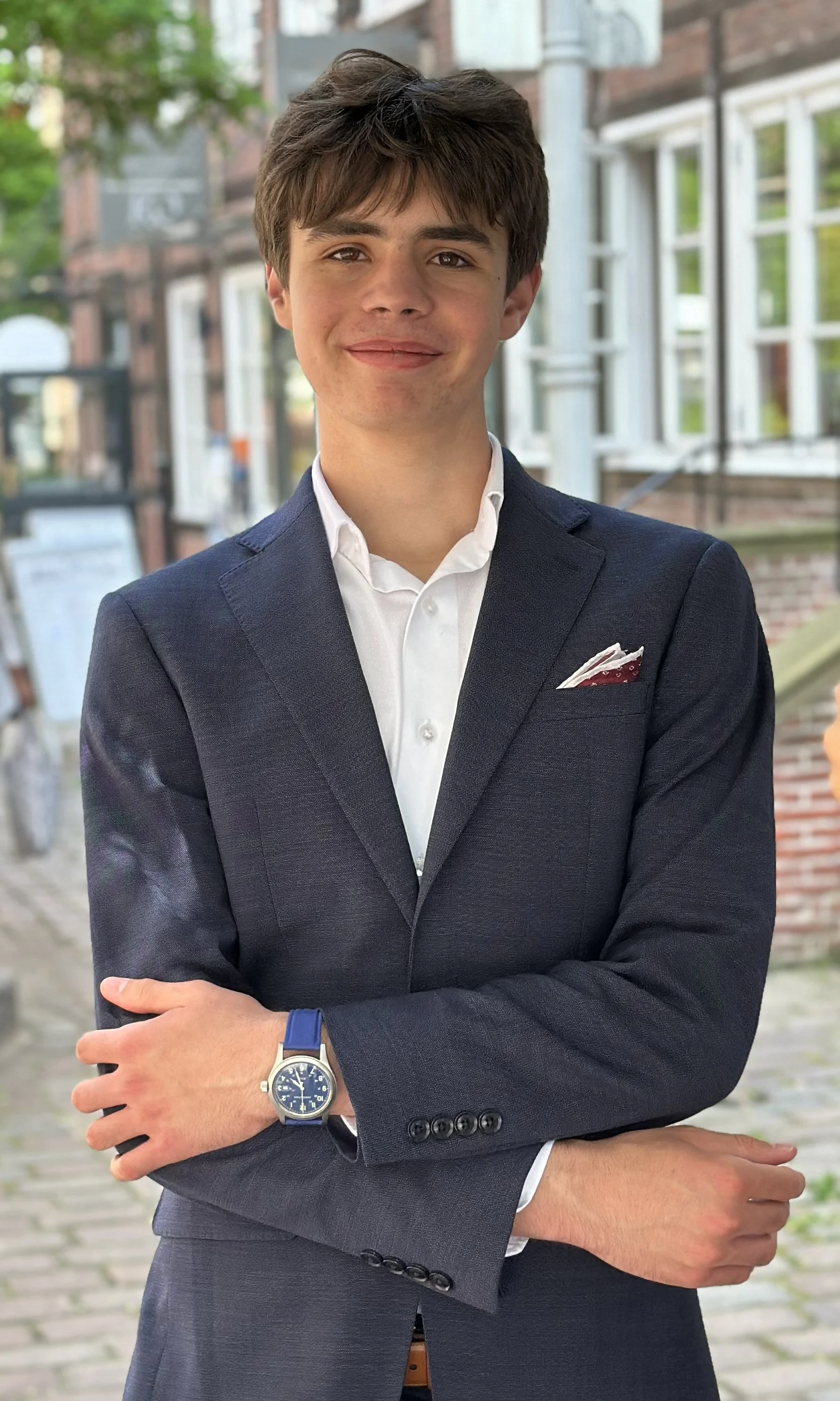
Edric Saphire is a composer at the New England Conservatory of Music, studying with Sid Richardson. He has been composing since he was nine years old and has had works commissioned by conductors such as Michael Francis and Jeffrey Malecki. He is an alumnus of the Mainly Mozart Youth Orchestra and Canyon Crest Academy.